This week did not produce one dominant headline. Instead, it produced a cluster of smaller moves that matter for the same reason: they all point to where leverage is accumulating in electronic music. Not only in artists or catalogues, but in infrastructure, audience access, and the systems that sit around culture.
SoundCloud introduces follower-exclusive releases
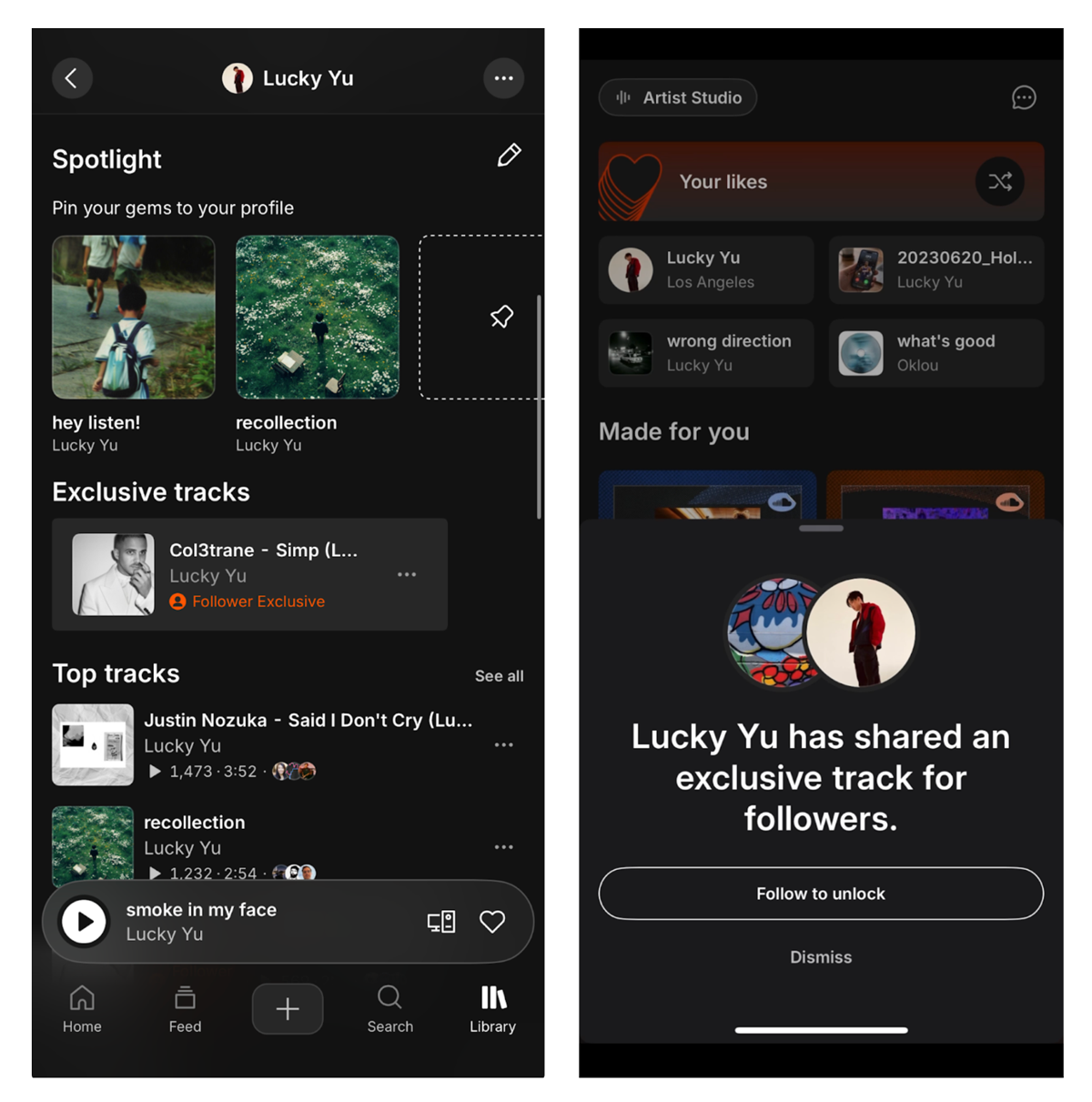 SoundCloud Newsroom · Product release
From early leak to owned access
SoundCloud launched Follower Exclusive Releases on March 30, allowing Artist Pro users to share tracks with their followers before any public release. Artists can choose between time-limited exclusivity or permanently gated content.
The behaviour this is designed to support already exists in electronic music. Artists test unfinished tracks in club sets, share early versions privately with key listeners, and build anticipation through informal circulation long before anything goes to Spotify or Apple Music. SoundCloud is trying to formalise that window and bring it onto the platform.
For artists, the practical value is in fan capture. A listener who follows you to get early access is a more committed listener than one who stumbles across you on an algorithm. The follow becomes a meaningful action rather than a passive one. For SoundCloud, the value is in owning the pre-release moment rather than being the platform people come to after release day has passed.
The question is whether artists will actually redirect their early-access behaviour here, or whether informal channels already serve this well enough. Either way, the intent is clear: SoundCloud wants to sit inside the artist-fan relationship before release day, not after it.
Warner Music Group agrees to acquire Revelator
 Infrastructure acquisition · April 1
The majors are buying the backend
Warner Music Group announced on April 1 that it plans to acquire Revelator. Revelator is not a label. It is a platform used by independent labels and distributors for digital distribution, royalty accounting, rights management, and real-time analytics.
The distinction matters. This is not WMG buying a catalogue or signing artists. It is WMG buying the infrastructure that other labels run on. Revelator's clients are the independent operators who have been positioning themselves as an alternative to the major system. After this acquisition, some of those operators will be running on systems owned by one of the three major labels.
Infrastructure ownership shapes a lot of things that are invisible to artists: how fast royalties move, what data gets surfaced to whom, whose reporting is accurate and whose is not. Whoever controls the accounting layer has a structural advantage, even if they never appear on a release.
It is too early to say how WMG will use Revelator's position, or whether independent labels currently on the platform will migrate. But the direction is clear: the majors are competing for the infrastructure layer, not just the catalogue.
The catalogue is visible. The infrastructure is not. That is precisely why it is worth paying attention to.
Beatport expands into live
 Beatport live · Miami + Las Vegas
From platform to operator
Beatport had two relevant live-facing signals in circulation around this week: The Block's US debut at Miami Music Week and the newly announced 16-week Beatport Fridays residency at Marquee Dayclub in Las Vegas. Read together, they show Beatport continuing to move beyond being a professional music store and into being a live operator with its own branded programming.
That matters because Beatport already owns a highly specific audience: DJs, producers, and serious electronic music consumers. If it can convert that audience from digital discovery into physical attendance, it extends its role from tool to ecosystem.
The commercial logic is straightforward. Right now, Beatport's relationship with an artist ends at the point of discovery or purchase. The artist gets booked, plays a show, builds an audience in the room, and none of that comes back to Beatport. If Beatport runs the event, that changes. They own the room, they control the lineup, they take a share of the commercial value of the live performance rather than watching it happen elsewhere.
For artists, a Beatport-branded event can mean exposure to exactly the kind of professional audience that uses the platform. That has genuine value. But it also means playing inside a platform's ecosystem rather than independently building a live career. Over time, the distinction may matter.
Beatport is not the first platform to attempt this kind of expansion. What makes it worth watching is the specificity of their audience. Their users already treat the platform as a professional tool. Live events that feel like a natural extension of that professional relationship are more defensible than a generic streaming brand trying to run festivals.
Culture, visibility, and platform dependence
 Historic Detroit · Packard Plant site
Detroit MODEM project scrapped
DJ Mag reported this week that plans to repurpose Detroit's Packard Plant into a $50 million redevelopment including the Museum of Detroit Electronic Music, affordable housing, public recreation areas, and an indoor skate park have been scrapped by city authorities.
The significance here is not just symbolic. It is a reminder that cultural importance and physical infrastructure are not the same thing. Detroit's role in the history of techno is secure. Building long-term institutions around that history is still much harder than celebrating it rhetorically.
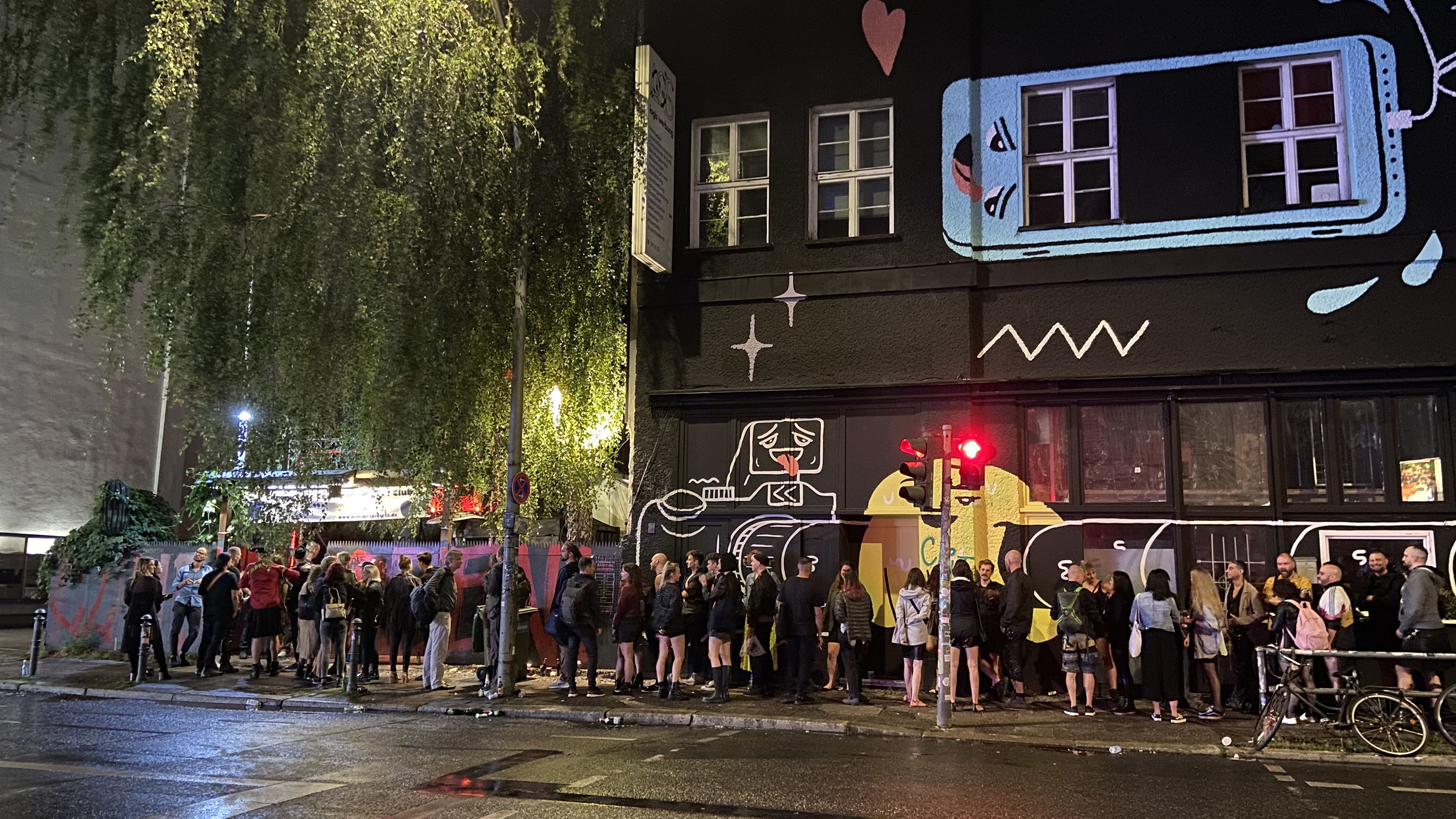 Berlin · Club entrance · Platform dependency
KitKatClub Instagram removed
KitKatClub's Instagram account was removed this week and then reinstated after a representative contacted Meta directly. Resident Advisor reported that the page, previously followed by a six-figure audience, had not been taken down by the venue itself. RA also noted that this was not an isolated case, pointing to similar issues affecting Gegen and Insomnia.
The important point is not that the account came back. It is that a venue's core public communication channel could disappear at all. For a club like KitKatClub, Instagram is not just promotional surface area. It is where events, updates, and visibility are concentrated.
The reinstatement matters, but it does not remove the underlying risk. If one platform can interrupt your communication with your audience, then that platform is part of your infrastructure whether you intended it to be or not.
Bloc hints at return
 UK warehouse circuit · Underground festival context
Bloc hints at a return
Resident Advisor reported that UK festival Bloc may return in 2027, with co-founder George Hull confirming plans for an event on March 6 at a London warehouse location yet to be announced.
Bloc was one of the defining UK festivals for electronic and experimental music before its collapse in 2012. Its potential return is not primarily a nostalgic story. It reflects continued demand for curated, community-rooted events that sit outside mainstream festival structures. The original Bloc had a specific identity: selective programming, a committed audience, and a refusal to compete on scale.
This is not about scale. It is about positioning. If Bloc returns and establishes itself again, it reinforces that there is still viable space for smaller, intentional festivals with strong curatorial identity. That is a different market from Reading and Leeds, and it requires a different approach from both artists and agents.
Barbican expands "anyone can dance"
 Institutional space · Late night programming
Grassroots culture moves into institutional space
DJ Mag reported that London's Barbican Centre is expanding its late-night "anyone can dance" series into a year-long programme featuring collectives including DAYTIMERS and Love in the Endz.
The direction here is not underground to mainstream. It is underground to institution. That is a different kind of move, one that changes audience, context, and economics without necessarily changing the music or the cultural identity behind it.
Institutional partnerships can extend reach and create programming stability that independent events rarely have. But they also come with constraints around identity, audience, and how the work is framed. Both things are true at once.
Reading and Leeds introduce a dance stage
 Reading & Leeds · The Warehouse stage
Dance music gets built into festival structure
Reading & Leeds announced The Warehouse, a new purpose-built dance stage for 2026. DJ Mag reports that artists playing across the stage include Hybrid Minds, Mall Grab, Rossi., Silva Bumpa, Hamdi and Omar+, with Skepta b2b Prospa listed for Reading.
This is not a surprise in isolation. Glastonbury, Parklife, and several European festivals have been doing this for years. But it marks another point in a gradual normalisation: electronic music no longer needs its own separate festival circuit to reach large mainstream audiences. The booking opportunities that come with that shift are real, even if the artistic context is different from a dedicated dance event.
More stages means more slots, and mainstream festival fees tend to be considerably higher than club fees at equivalent audience sizes. The market for electronic music artists who can play festival settings is genuinely expanding.
Where leverage is moving
What connects these stories is not genre or geography. It is leverage.
SoundCloud is trying to own a more valuable stage of the artist relationship: the moment before a release goes public. Warner is buying infrastructure used for distribution, rights management, royalty accounting, and analytics rather than buying attention directly. Beatport is extending itself from digital discovery into physical rooms. Even the KitKatClub story, although very different in scale, points to the same issue from the opposite side: if visibility sits inside a system you do not control, then part of your operation sits there too.
The Bloc and Barbican signals sit at a different register, but they are not unrelated. They point to where demand is forming at the edges of mainstream culture: curated, community-rooted events that people seek out precisely because they are not generic. That is a different kind of leverage, built on identity and trust rather than infrastructure and capital. But it is leverage nonetheless.
For artists, the question is no longer only whether the music is strong. It is whether the structure around the music is resilient: who owns your audience access, what systems carry your releases, and what contexts give your live performance meaning. For agents, it means reading demand signals more carefully across all of these layers, not just where the fees are highest.
Owning the catalogue
Controlling distribution
Access to radio and press
Owning the audience relationship
Controlling the infrastructure others depend on
Capturing attention at every touchpoint
Become an Agent
The kind of thinking in this post, reading platform moves, understanding where leverage sits, knowing what demand signals actually mean for a live career, is part of how working agents stay useful to their artists. Become an Agent is a 13-week course that covers the full scope of what booking agents actually do: how they read the market, how they build relationships with promoters, how they negotiate, how they sustain a roster. It is taught by Alma Ernst, who has been doing this work for over 30 years, and Panicos Demetriou. It is not a theoretical course. It is built around how the job actually works.
None of this week's news was dramatic. Most of it will be forgotten by next week.
But the direction it points to is slow-moving and worth tracking. The people building durable careers in this industry, whether as artists, agents, or operators, tend to be the ones who understand the system they are working inside. This column exists to help with that.